Space Debris
Objective: Students will learn about the problem of space debris and design and build a prototype of a space debris removal system or tool.
Grade: 6th
Length: 2 class periods


Grade: 6th
Length: 2 class periods

Lesson Development Process
1. Study the science curriculum: There is a sixth grade astronomy unit at the beginning of the school year. Standards related to this problem are:
SCI.G6.8.c. The role of gravity
SCI.G6.8.d. Revolution and rotation
SCI.G6.8.i The history and technology of space exploration
SCI.G6.1.i Models and simulations are designed and used to illustrate and explain phenomena and systems
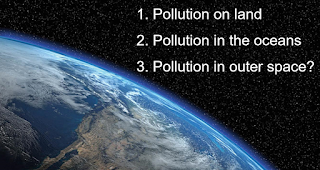
2. Research the real-world problem: This problem affects all people on Earth. There are more than 500,000 human-made objects orbiting our planet. Space debris can collide with satellites, spacecraft, etc., resulting in more space debris. Scientists and engineers are working on solutions to clean up space debris. The image above and a short video clip (https://scroll.in/video/871029/video-heres-why-you-dont-see-space-debris-in-satellite-images) will serve as a hook at the beginning of the lesson.
3. Brainstorm engineering solutions to problem: Students will work in groups to research methods for clean-up being tested by scientists and engineers. After conducting research, students will design and build a prototype of a space debris removal system or tool. Students can use an established design as inspiration or come up with a unique idea. Students will test their prototypes in the classroom to see if they are able to retrieve or knock a piece of "space debris" safely out of orbit.
4. Incorporate technology: Students will use iPads to research current methods for dealing with space debris. Videos and directions will be projected on an interactive whiteboard in the classroom.
5. Look for correlated math standards: Students will analyze statistical information from an infographic about space debris. Students will apply knowledge of velocity and speed as they compare the speed of space debris in low-Earth orbit to the speed of sound and the average speed of a car traveling on the highway.
6. Allow for creativity: Because this lesson is for sixth grade, students will have freedom of choice in materials. If they choose to, students will have the opportunity to add personal or artistic touches to their prototypes.
- Jennifer Clark, FCPS STEAM Teacher
- Jennifer Clark, FCPS STEAM Teacher


Comments
Post a Comment